GREEN FRAUD

THE CRIMINAL INSANITY OF BIODIVERSITY AND REMNANT VEGETATION OFFSETS - AND THE DELIBERATE IGNORANCE OF SIGNIFICANT ENVIRONMENTAL AND CLIMATE IMPACTS
Offsets exist to permit and greenwash major destruction of habitat and biodiversity, not to prevent it, and significant impacts which cannot be addressed are routinely ignored in the implementation of environmental legislation.
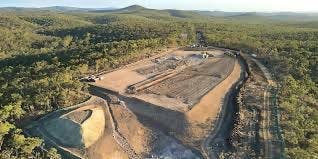
Offsets are the cornerstones of both the EPBC (Environment Protection and Biodiversity Conservation) legislation and state legislation such as Queensland’s Vegetation Management Act (VMA). The fundamental priorities are clearly not preservation and enhancement of biodiversity and remnant habitat, but its greenwashed destruction.
The Australian and State Governments utilise offset schemes to compensate for the destruction of habitat and biodiversity. At least that’s what their pervasive narratives state. Even worse, now the Australian Government, virtually unchallenged, states that the use of biodiversity offsets results in a “conservation gain”. This is stated by politicians and public servants, and on the DCCEEW (Department of Climate Change, Energy, Environment and Water) website, in official government documentation and briefings, and in the approvals “statement of reasons” for multiple destructive development projects.
The rationale is essentially this: when a development is clearly going to “impact” (destroy) significant areas of habitat for EPBC-listed endangered species, the federal government requires that an offset area be found, preferably nearby, containing a significant area of similar habitat to that which will be destroyed. Because there is tacit recognition that simply “protecting” pre-existing habitat for that species will not compensate for its destruction elsewhere, the rules demand that multiples of pre-existing habitat area elsewhere are protected, often at least in the ratio of 4:1 – in other words, four times (or more) the area of habitat that will be destroyed is to be (temporarily) protected elsewhere.
Another facet that implicitly acknowledges that simply protecting pre-existing habitat is not enough is that the offset areas are to receive “management” to improve the habitat quality for the endangered species in question. This will supposedly magically transform the habitat such that the endangered species, whose habitat was destroyed by the development, will flourish in numbers sufficient to compensate for the individuals of the species inevitably killed by the destruction of habitat in the development area.
The Queensland VMA imposes similar rules for the destruction of “remnant vegetation”. But the only ecosystems that receive such attention are those termed “of concern” and “endangered” Regional Ecosystems. Queensland has a comprehensive system in which every type of natural ecosystem is labelled and categorised. Those judged to have more than 30% of their assumed “pre-clearing” extent are deemed of "no concern" and don’t even receive consideration in the offset scheme. They can be destroyed with gay abandon until the extent falls to less than 30% of the pre-clearing extent. It is advised that destroyed areas be “rehabilitated” where practicable. However, special considerations apply when such ecosystems are adjacent to wetlands and watercourses or constitute “essential habitat” for state-listed endangered species, in which case offsets are also required, much the same as the federal government requires them.
“Endangered” regional ecosystems are ecosystems where only 10% or less of the pre-clearing extent is thought to exist. Both “endangered” and “of concern” regional ecosystems must be “rehabilitated” after clearing; when that is not possible, their destruction also requires an offset area. Because their extent is already limited, it is often difficult to find suitable, comparable regional ecosystem types as offsets, especially at the required ratios. That’s where cash offsets come into play – and the Queensland Government utilises a “cash offsets” scheme.
If the destroyers of biodiversity and habitat (“developers”) cannot find suitable habitat as offsets, they may pay cash to the state government to compensate for the loss of habitat and remnant vegetation that the developer finds difficult to locate and protect in the required areas.
Even worse, the Federal Government has now introduced such a system in the recent “EPBC Amendments Bill”, whereby developers who have difficulty (or can’t be bothered) finding the required habitat for endangered species can pay the federal government to compensate for the destruction of endangered species habitat. The understanding is that the Federal Government “will sort it out” – they will magically provide habitat for the endangered species in the required area sizes, allowing development to proceed and “conservation net gain” to result.
This is the federal government’s “win-win”. A win for developers, no doubt, but how exactly is this a “win” for the environment?
It isn’t.
Fundamentally, offsets are a flawed and outrageously erroneous measure to remedy the destruction of biodiversity and habitat. Let’s go through the problems one by one:
1. Fundamentally, the protection of pre-existing habitat, regardless of size ratios compared to that destroyed, cannot compensate for the destruction of habitat.
2. There is no scientific study that confirms the federal and state governments’ validity of their approaches. In fact, the studies show that offsets predominantly fail to provide population-level compensation for habitat destruction.
3. Offset areas are often under some level of protection under the VMA Act, and even their reclassification as “Category A” does not totally protect them from clearing; it just upgrades their protection, makes their clearing more difficult legally, and does not prevent their illegal clearing. There have been numerous instances of offset areas already being under higher levels of protection, such as in conservation reserves, or being used multiple times by different developments. And they have been illegally cleared in many instances.
4. Offset areas are stipulated to supposedly contain the same kinds of habitat as required for the endangered species in question. Still, there are plenty of instances where the relevant endangered species has not even been recorded in the offset area – often, the habitat is clearly less suitable than the habitat being destroyed. And if the species does not even occur in the offset area, how is the species meant to flourish to provide population-level compensation for the destruction of habitat which was utilised by that species? Magic?
5. Offset area management, which is also enacted to compensate for the destruction of habitat, consists typically of “weed management”, “feral pest management”, “fire management”, or denial or limitation of grazing by non-native herbivores such as cattle. This is problematic due to:
a. The pre-existence of such measures in many offset areas – typically weed management and feral pest management is already in place and offset area management offers essentially no change. Increased visitation to offset areas by developers and contractors may, in fact, aid weed dispersal.
b. Fire management may also be in place to some degree, and often offset plans suggest (not stipulate) that traditional owners be involved in fire management. In many cases, the relevant traditional owners live some distance away and have no inclination or relevant knowledge to assist with this – they may have had no contact with the land to which they have been granted native title for generations. Additionally, different endangered species require different forms of fire management, yet they are all supposed to benefit from whatever fire management occurs. Some endangered plant species are not fire-tolerant whatsoever.
c. Sometimes offset management requires that cattle be limited from accessing the offset areas; in other plans, “strategic grazing” is permitted in the offset areas – as decided by the landholder- which is essentially business as usual. Eliminating cattle from entering offset areas (pre-existing habitat), if that’s what the approval conditions dictate, may benefit some species marginally but will probably do little to benefit most endangered species, and certainly not enough to compensate for complete destruction and fragmentation of habitat elsewhere.
d. Offset Area Management lacks independent oversight and enforcement. It is virtually meaningless. There may be audits which occur every 5 years or so but the results of these audits are not made public.
e. There has been no public accountability of the efficacy of offset management for any development. Certainly, no evidence has ever been provided by governments and developers to suggest that it really has compensated for the destruction of habitat and provided ‘net conservation gain’.
6. Temporal mismatch between offsets & impacts & rehabilitation: in many developments, the offset requirements are claimed to be reduced due to rehabilitation of cleared areas during operation. For example, this occurs with wind farms where rehabilitation of cleared vegetation is claimed to occur during operation, thus reducing the offset requirements for loss of habitat of endangered species & ecosystems. This is very problematic, as it is assumed intrinsically that the rehabilitated areas immediately become viable habitat on the commencement of rehabilitation. The reality is that cleared habitat which is replanted takes many decades for it to become viable habitat for many species, if indeed that ever occurs. For species which depends on tree hollows, tree hollows do not mature for at least 50-100 years, yet this rehabilitated habitat is outrageously assumed to be habitat which reduces offset burden. Additionally substantial portions of rehabilitated habitat will again be cleared for decommissioning and repowering of wind turbines – but that is neither acknowledged by proponents and governments. It’s even worse, because that rehabilitated habitat is often prone to edge effects which normally degrades ecosystems and reduces its viability as habitat (see below). Additionally, offset areas are protected for only the duration of a project. So, in many cases it is likely that the protection of offset areas will lapse before any significant rehabilitation of cleared areas occurs after the termination of the project. So, in theory it is possible that areas which were formerly offset areas are cleared for another project long before rehabilitation of the initial site occurs sufficiently for those areas to have value for endangered species as viable habitat, if indeed that does eventuate. Outrageously, for wind farms such as Gawara Baya, the habitat for Sharman’s Rock Wallabies which is destroyed for construction activities is claimed to be rehabilitated during the life of the wind farm. How exactly will the proponent be re-creating boulder fields, caves, and crevices after the habitat has been blasted and destructive earthworks which involve flattening of all habitat ensue (see below – “Loss of ground habitat”)?
7. It is difficult to understand how offsets as provided under the VMA will compensate for the destruction of regional ecosystems. Regional ecosystems require sufficient land area, and offsets cannot compensate for their destruction, regardless of management within offset areas. The offset rules are simply rules that greenwash the destruction of regional ecosystems rather than halt it.
8. Offset areas may suffer the same impacts from the development – for example, the offset areas for wind farms are often immediately adjacent to the clearing and infrastructure for wind farms, such as with the Clarke Creek and Kaban Wind Farms. Therefore, the offset areas and their habitat suitability are substantially degraded by edge effects, noise, and disturbance impacts (see below), and cannot provide any legitimate compensation for the destruction of habitat, even if offset schemes were proven to work in general (they are not).
9. Cash offsets clearly expedite development but do not expedite conservation. There is nothing forcing governments to find, provide, or “create” suitable habitat for endangered species and repopulate it with them. It is ludicrous to suggest that this is a bona fide conservation policy.
10. The complete lack of accountability of all offset schemes, which seems to be deliberate, hides the obvious failings of offset schemes as compensatory mechanisms for the destruction of habitat. There is scant peer-reviewed science on the efficacy of offsets; what science does exist regarding Australian wildlife has clearly shown them to be a failure. An examination of offsets for the loss of koala habitat revealed the deplorable outcomes of offset schemes used to compensate for its destruction[1]. Research on the spotted-tailed quoll showed that there was no significant difference in outcome between strong and weak environmental measures, in other words, those that required offsets for destruction of habitat and those that didn’t[2]. Worse still, as noted above, the brazen, wide-eyed individuals in the federal government with "callous-unemotional traits" now claim that offsets provide a “conservation gain”. And the situation has now become far worse with “cash offsets”.
THE GREENWASHING OF VIOLENT ENVIRONMENTAL DESTRUCTION
Historically, industries responsible for significant environmental harm have often minimized or obscured the impacts of their activities through carefully chosen euphemisms and public relations strategies—a practice widely recognized as greenwashing. These linguistic and communicative tactics, frequently developed by corporations or their advocates, have been adopted and legitimized by regulatory bodies often criticized for being overly influenced by the sectors they oversee (a phenomenon known as regulatory capture). [3]
For example, the direct destruction of habitat via bulldozers, excavators, and explosives has now been named “disturbance” by developers and their contracted ecologists, and the zone of destruction is called “the disturbance footprint”.
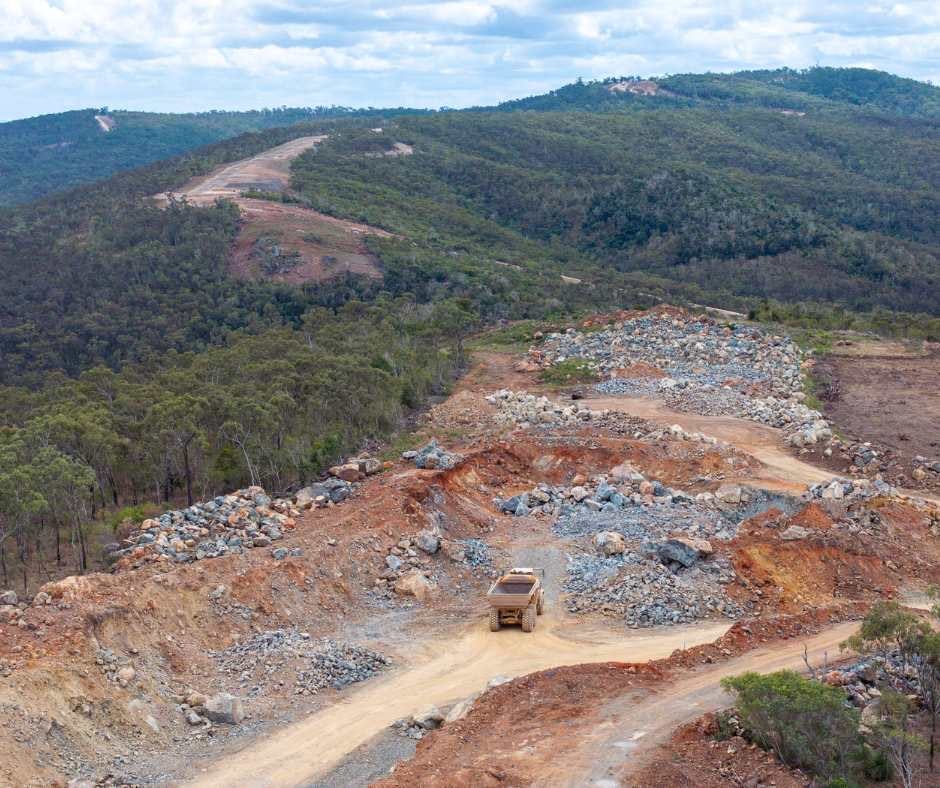
Ecosystem “disturbance” in the “disturbance footprint” of Lotus Creek wind farm in prime Koala and Greater Glider habitat, Clarke-Connors Range, Central Queensland. Don’t worry, its all offset!
Instead of questioning & countering this outrageous terminology, governments have been entirely complicit with it and actually use the same terminology to describe the violent environmental destruction of habitat.
The word “offsets” itself further sanitises and legitimises this violent environmental destruction. “It’s all ok, we have designated offsets”.
If you can, imagine your entire community’s homes being demolished by bulldozers and explosives, along with all the local food sources and livelihoods that sustain the people who live there. You’re then assured that it’s acceptable—because somewhere else (you’re not told exactly where), other people’s homes and food sources have supposedly been safeguarded or even slightly improved (perhaps only temporarily).
This would be clearly outrageous, and unacceptable, but that’s exactly the way we treat endangered species of wildlife & flora. Non-endangered species and ecosystems don’t even get an offset. They are simply destroyed and that’s it for them, forever.
ANIMAL WELFARE ISSUES WITH OFFSETS
There are intrinsically many animal welfare issues that arise with the use of offsets. It is illegal to cause suffering of any animal, including wildlife. When habitat is destroyed, it is inevitable that wildlife will die as a result – if not by the trauma of having the tree they occupy felled, or their boulder habitat blasted, by the slow death due to starvation and exposure caused by loss of habitat, food supplies & shelter.
This is predictable and consequential. The protection of pre-existing habitat elsewhere in no way negates the animal cruelty & suffering resulting from habitat destruction, and actually provides cover for it.
Intention law states that if an adverse or criminal outcome is the predictable consequence of an action, then that action itself should be regarded as illegal.
Under principles of intent in law, if a harmful or criminal outcome is a reasonably foreseeable consequence of a particular action, that action itself can be treated as unlawful.
This idea aligns with established legal doctrines such as:
• Foreseeability — in both criminal and civil law, where knowledge or reasonable expectation of harm can establish liability.
• Mens rea (guilty mind) requirements — certain offenses can be proven by showing recklessness or willful disregard for predictable consequences, even without deliberate intent to cause the exact harm.
• Doctrines like depraved-heart murder or transferred intent — where extreme recklessness leading to predictable death or injury supports criminal charges.
For example, knowingly releasing a toxic substance into a river when pollution and harm to public health are predictable outcomes could render the action itself illegal under environmental or criminal statutes.
In Australia, knowingly destroying habitat is generally unlikely to attract criminal charges and prosecution unless it is shown that the person destroying habitat is aware that the habitat contains “protected matters”, for example, endangered species. If the habitat does contain protected matters or its destruction and “development” will adversely impact protected matters, then, by law the proposed habitat destruction is referred on to the Federal Government’ Department of Climate Change, Energy, Environment & Water (DCCEEW)[4]. Then it is assessed by the Department and if its impact is arbitrarily considered to be “significant” then it is considered a “controlled action” which may attract a requirement for mitigation measures and offsets. This legally sanitises the destruction of ecosystems and habitat and removes those destroying the habitat and protected matters from legal responsibility.
However, there is nothing in the relevant legislation (EPBC Act and VMA Act) that specifically absolves the perpetrators from responsibility for animal cruelty of any species, endangered and non-endangered.
Deliberately destroying habitat, when it is known that the adverse outcome of animal suffering will eventuate should trigger animal cruelty charges against developers, by rights.
No property developer, or any developer for that matter, who orchestrates the destruction of habitat, has ever been prosecuted for animal suffering, abuse & neglect, as result of destruction of habitat. Does approval of a development under state & federal environmental laws abrogate responsibility for animal cruelty? Are not state & federal governments complicit with such cruelty? These are questions we should be seriously asking.
SO HOW DO ACADEMIA AND ENVIRONMENTAL NGOS RESPOND?
Academia and Environmental NGOs have largely failed to publicly criticise offsets as a conservation measure. Many academics and NGOs (& even politicians) have condemned offsets where the offset areas are already under some level of protection[5], but they have not criticised the overall failures of offsets to provide any positive outcome. Indeed, NGOs such as ACF have claimed that “offsets should only be used as a last resort”[6], echoing EPBC reviewer Graeme Samuel’s words. But this does not acknowledge that the large-scale impacts of many developments necessarily require offsets to be utilised, because there can be no satisfactory avoidance and mitigation measures. So, in effect, this narrative adheres to the prioritisation of development over environmental & biodiversity conservation. It is shameful that these NGOs are, in fact, complicit in the use of offsets.
Many academics have claimed that offsets should require “like for like” compensation [7]. In other words, the offsets should be of the same character as the ecosystems and habitats destroyed. This requirement is obvious, but again, it reveals a certain level of complicity with offsets and gives offsets a degree of legitimacy.
Academics have also suggested doubling the currently accepted offset area requirement. Again, this is complicit with the paradigm that offsets are bona fide conservation measures and do not in any way restrict or stop development, except if the required areas cannot be identified – but now cash offsets have sidestepped this roadblock altogether.
I note that many biodiversity/conservation academics' employers are either universities, which are generally in favour of endlessly increasing population and economic growth[8], and/or governments, which are also in favour of the endless growth paradigm[9]. Any prioritisation of the environment over development will clearly impact the growth of certain industries and overall exponential growth as dictated by economists.
It is worth noting that exponential growth causes disproportionate damage to the remaining functioning biosphere due to the finite nature of the biosphere, its already depleted state, and the synergies between multiple pathways of damage. It seems most people, let alone politicians, don’t understand the exponential function – 1% growth of a larger population is much more incrementally damaging than 1% growth of much smaller populations and economies, and technological advancement actually increases the proportional damage. Do academics also not understand the exponential function? What seems to explain their silence & complicity with this?
A shorthand way to understand the impacts of growth is to take the growth rate and divide that into 70 to find the time required for doubling of size. So, an economy or population with an exponential growth rate of 1% per year will double in size every 70 years. If the growth rate is 2.5% per annum that will see a doubling in size every 28 years. And generally speaking doubling of size 10 times equates to a 1024-fold increase in size (2¹⁰ = 1024). This magnitude of rapid, unchecked growth is frequently associated with collapse across multiple fields because it fundamentally overwhelms existing resource limits, carrying capacities, or structural integrity.
Modern macroeconomic and demographic growth operates exponentially. If economic or resource demands double continuously, the resulting 1000-fold or larger multiplier quickly collides with Earth's physical limits, driving ecological or sustainability collapses.
Humans, in their evolution, are thought to have suffered a genetic & survival bottleneck where only around 1280 breeding individuals existed. If that number doubles ten times, only 1.3 million individuals is reached, and this was likely enough to cause extinctions, as this population size was likely relatively localised. That population doubled a further 10 times to reach a population of 1.3 billion humans by around 1870. By that stage, ecosystem destruction was widespread across all continents (except Antarctica) and the extinction rate was already massively increased.
But not only that, our affluence, our resource demands on a per capita basis have also significantly increased, driven by technological advancements & enhanced resource utilisation.
Many academics in the biodiversity and conservation fields name “habitat loss” as the primary cause of depletion of populations and extinctions of wildlife yet steadfastly refuse to name the upstream drivers of economic & population growth.
Many biodiversity and conservation academics also receive funding from billionaires and their philanthropies, or from industry itself, and work on ways in which growth of industry can supposedly be accommodated whilst “minimising” biodiversity impacts. They are necessarily complicit with offset schemes and the destruction of biodiversity. How else do these projects get approval without the use of “offsets”?
Similarly, academics and environmental NGOs seem to have been strangely silent in failing to criticise the Federal and State Governments for failing to appropriately engage with the impacts of edge effects, fragmentation, and noise and disturbance, and other impacts, in implementing and drafting relevant legislation. Follow the money?
As usual, our environment and biodiversity suffer from the endless growth paradigm, the greenwashing of its catastrophic environmental impacts by federal and state governments, and the complicity of academia and ENGOs.
THE MAJOR CAUSE OF EXTINCTIONS
As demonstrated in multiple scientific papers[10][11], contrary to media and government narratives, the major cause of extinctions happens to be the destruction of habitat, not climate change, as has been the case for hundreds of years. Climate change will obviously be an increasing risk to many species, but the primary cause of extinction risk for the majority of species is habitat “loss” – destruction.
The major cause of habitat destruction globally has been & continues to be rapidly increasing human overpopulation[12], mediated via the agricultural land requirements of feeding billions of increasingly urbanised humans. This food requirement is in itself a major cause of climate change, as it has destroyed huge areas of carbon sinks, leading to massive emissions (it’s estimated that 30% of all GHG emissions since 1850 have been due to “deforestation” alone)[13], and this has caused ongoing loss of carbon sequestration and fossil fuel emissions; fossil fuels are an essential component of virtually all food production and delivery to humans.
Additionally, increasing numbers of humans demands more housing, more roads & other infrastructure, more hospitals, schools, shopping centres, industrial estates, more fossil fuel extraction, and more mining generally, including mining for both fossil fuels and critical minerals. The cumulative impacts of these developments exert a horrendous impact on other species & carbon sequestering ecosystems, especially in the proximity of cities & larger regional centres.
It’s worth noting that historically, major human settlements have been situated in the midst of the best agricultural areas. These are often located next to permanent navigable watercourses on flat arable & highly fertile land, usually consisting of or in proximity to flood plains. Before the advent of human agriculture, these areas were probably also the most highly biodiverse, supporting impressive forests and harbouring astounding ecological complexity. We have already lost the best nutrient-recycling and carbon-sequestering forests on many continents.
And even before the advent of agriculture, extinctions were also rapidly increasing, particularly of megafauna & associated species, due to hunting and the use of fire for ecosystem modification – a prototype form of agriculture.
A major aspect of the unsustainability of human civilisation is not only the destruction of highly biodiverse ecosystems for agriculture, but the subsequent destruction of agricultural areas in favour of urbanisation. This drives the destruction of ecosystems and biodiversity, often distant to cities, for yet more agricultural production.
There is no doubt also that the direct impact of many industries however is also exerting an increasingly profound loss of biodiversity and ecosystems. Industries that are rapidly increasing in impacts are mining industries, especially those that mine critical minerals, which often happen to be in increasingly remote and biodiverse regions of the planet.
The mining of critical minerals is also likely to cause extinctions and declines of 4642 IUCN-listed vertebrate species (8% of total vertebrates)[14]. If one were to include invertebrates, plants & fungi, and the multitudes of species not currently considered endangered, but impacted by this mining, the toll on biodiversity is much greater.
Mining in remote areas also contributes “knock-on” effects via new roads and opening up and fragmenting ecosystems for logging, new agriculture, and other forms of mining & exploitation including poaching for the pet, reptile skin and Chinese medicine trades, and the obscene bushmeat trade.
Additionally, massively area-intensive & location-specific sources of energy, such as solar farms & wind farms, are also exerting a profound and increasingly unsustainably impact on biodiversity. Already in 2025, a scientific paper has documented that wind & solar farms are now occupying over 26,840 square kilometres of biodiverse habitat and indigenous lands[15]. As well as having grave impacts on biodiversity, the destruction of these areas of ecosystems will of course be having detrimental climate impacts. It has been determined that over 2310 IUCN-listed endangered species are suffering impacts from the rollout of renewable energy globally, and many other species will be suffering significant declines, pushing them also towards extinction.
For most species in danger of extinction, and those that aren’t, its relentless human expansionism which poses the greatest dangers, not climate change. And that human expansionism is itself a potent cause, if not THE CAUSE, of climate change.
FUNCTIONAL EXTINCTIONS & EXTINCTION LAG
Significant destruction and fragmentation of habitat have already caused the likely functional extinctions of many species even though they are yet to become extinct. This is because the amount of destruction and fragmentation of habitat, and other causes already apparent, will likely cause the extinction of multiple species at some stage in the future, even without further habitat destruction and fragmentation and increasing other causes. This is due to isolation of small and possibly unviable populations which are at increased risk of inbreeding, disease, fire and climate change.
This situation is never considered in environmental documentation of developments and the DCCEEW and state environmental departments do not engage with this issue.
Additionally, the specific impacts of various developments even as they stand now will likely cause ongoing population declines in various species, likely leading to local extinctions & possible total extinction.
There’s often a delay between cause and effect. The full impact of developments and industries on biodiversity can take years or even decades to manifest but it will happen. A classic example is new housing estates built in wildlife habitats. Property developers exploit the presence of remaining wildlife like koalas and kangaroos, advertising that new residents will be “at one with nature” or using slogans like “escape to nature”. However, within a few years, the wildlife usually disappears, victims of habitat loss, new fences, vehicle collisions and dog attacks. This lag between cause and effect is a common issue.
SHIFTING BASELINES & OVERSHOOT
“Shifting baselines” describes the normalisation of ecosystems and habitat degradation; this leads to tacit acceptance of the decline and extinction of numerous species both locally and globally.
Humans perceive what we experience as “normal”, without reference to what may have been the previous state of these areas and their biodiversity. We often tacitly assume that areas of pastures, crops, and urbanisation have, for all intents and purposes, always been that way. “It’s normal”.
The reality is that everything is rapidly changing. Ecosystems are being degraded through multiple impacts, including rapid urbanisation, mining and agriculture expansion. Just because daily changes seem minimal or absent doesn’t mean they aren’t happening. Humans are ill-equipped to perceive and comprehend rapid changes over longer timescales and understand how they might have been before our personal experiences.
Many ecosystems, perhaps except the most remote, are already significantly degraded by factors like weed invasions, feral species and prior extinctions such as those of megafauna and numerous other species. Consequently, ecological processes like nutrient cycling, carbon sequestration, and pollination, are already impaired.
This is not acknowledged by the DCCEEW & developers, & ecologists acting on their behalf.
They’re always quick to mention weed and feral species, implying the habitat is already severely degraded and can be easily sacrificed for development. This counterargument – that degraded ecosystems should be urgently restored and revitalised – is never considered.
Additionally, the state of overshoot of multiple planetary boundaries such as loss of biosphere integrity and “land use change”, as well as loss of biodiversity, is also not engaged with, even though every development incrementally, as well as synergistically, causes a decline on all these relevant manifestations of overshoot.
These impacts make the developments, particularly those harming remnant ecosystems, particularly harmful to the functioning biosphere, the climate, and the planet as a whole, but there is lack of engagement with this inconvenient topic by both the contracted ecologists and governments.
Governments routinely fail to consider that the land use and emissions impacts of current economies & populations are deeply unsustainable in terms of their impacts on the functioning biosphere as well as chemical composition of the atmosphere, because considering that honestly is inconvenient to their pro-growth agendas
THE DELIBERATE IGNORANCE OF SIGNIFICANT RESIDUAL IMPACTS
The situation for biodiversity is even worse.
Significant impacts on biodiversity are not even being addressed by offsets, as woeful as they are as a conservation measure.
EDGE EFFECTS
Whilst edge effects are often mentioned in the documentation of the environmental impacts of developments, there is no effort to address this significant impact in terms of offsets. Edge effects cannot be avoided or mitigated; therefore, under EPBC legislation, they must be offset (despite the lack of efficacy of offsets). Edge effects degrade ecosystems due to changes in microclimate, increased dust, weed invasion, increased fire risk, and noise and disturbance[16][17].
Many species of wildlife, including endangered species such as the greater glider, avoid areas near clearing edges[18]; thus, areas of edge effects can be reasonably calculated, yet there is no attempt to offset them, despite habitat often not being used by relevant species and being effectively denied by the presence of adjacent clearing.
The EPBC Legislation actually requires that all significant impacts be addressed, yet edge effects are not treated in this way. The VMA also does not account for edge effects whatsoever, despite these effects being known to degrade ecosystems near clearing edges. This is a grave shortcoming.
FRAGMENTATION IMPACTS
Another significant impact of many developments, especially those containing linear infrastructure that requires clearing of habitat and ecosystems, is fragmentation. Examples include new and widened roads, railway lines, high-voltage power lines, pipelines, housing estates, and wind farms.
Fragmentation profoundly increases edge effects, as the length of the clearing increases exponentially[19][20]. Wind farms may include over 100km of new roads, many of them around 50m wide in rugged country, dramatically increasing habitat fragmentation. Fragmentation results in ecological impacts to threatened species that are multiples of those suggested by sheer clearing impacts alone. As well as altering microclimates and the local climate, fragmentation restricts and halts the movement of many wildlife species across landscapes, thereby isolating populations and making them more vulnerable to the impacts of fire, disease, and climate change. These impacts can also affect endangered plant species. Additionally, networks of new roads facilitate access to sites by feral predators, resulting in population declines in many endangered species and possible local extinctions.[21]
The VMA does engage with fragmentation and connectivity in its rules, also known as “Performance Outcomes”, but these rules only engage with already fragmented landscapes and do nothing to halt or even address fragmentation-causing developments in previously largely intact landscapes. Despite fragmentation of habitats and ecosystems clearly being a significant residual impact, it is not engaged with or addressed in the implementation of the EPBC Act. Why not?
NOISE AND DISTURBANCE IMPACTS
Many types of developments exhibit profound “noise and disturbance” impacts. These often result in the exclusion of habitat by many species of wildlife – they simply cannot live within proximity of these noise and disturbance impacts, and they flee such areas if and when they can.
Many species of birds have been observed to abandon nests when developments that produce strong noise pollution are built nearby. This habitat denial overlaps with “edge effects;” for example, many species have been shown to be excluded from 50-200 m of habitat by the presence of busy roads, and some of that effect may be due to microclimatic impacts and habitat alteration caused by weed incursion or feral predators.
Airports, railway lines, and other noisy developments likely cause even greater habitat exclusion, which cannot be explained solely by “edge effects”.
Wind farms are an extreme example. Research in the Northern Hemisphere shows that many groups of birds and mammals are excluded from the proximity of wind farms by up to 5km, perhaps even more for some species over the longer term[22]. These impacts can be mapped, as likely habitat exclusion areas can be estimated, even if they are not known directly for the species involved. For example, raptor species similar to those that occur in Australia have also been studied for their noise and disturbance impacts in the Northern Hemisphere. The acute hearing of many species of Australian wildlife (e.g., Greater Glider, Koala) suggests they are highly sensitive to noise impacts, and these impacts are not realistically captured by dBA (human hearing-approximated) analysis and modelling, as many species can hear frequencies well below and above those humans can hear, at often increased intensity. These studies have shown that habitat within a certain distance from wind turbines is effectively denied for the species in question. Therefore, the lost habitat area should be addressed through proper implementation of the EPBC Act and habitat area offsets. If the areas are not known precisely, the Precautionary Principle should dictate that at least the estimated areas of habitat exclusion be offset (under the current offset-based EPBC Act). If the appropriate areas cannot realistically be offset, such developments should be obviously rejected.
The same should occur under the Queensland Government’s State Code 23. In fact, there is an acknowledgement in the wording of this code that the impacts of wind farms can be experienced distant from the wind farms themselves, but recent updates of this code have failed to engage with the “best available science” that wind farms cause substantial areas of habitat degradation and denial for state-listed endangered species in areas in proximity to them. Additionally, wind farms have been shown to produce substantial infrasound impacts. Infrasound is somewhat different to dBA range noise pollution, as it is carried a lot further in higher volumes. Humans cannot hear it, yet it can cause profound health impacts to those who live and work nearby. Its impacts seem to be cumulative. There is nothing to suggest that species of wildlife & animals generally don’t suffer the same kinds of impacts that humans do from infrasound. In fact, it’s likely they suffer increased consequences to their survivability due to the fact they are likely to hear infrasound (& ultrasound) more acutely, as well as suffering physiological and pathological impacts of infrasound. Studies on laboratory animals subjected to infrasound exposure in much the same volumes as that caused by wind farms show profound health impacts.
COLLISION & BAROTRAUMA IMPACTS
You will have probably heard about collision deaths of birds due to buildings, particularly skyscrapers[23], and wind farms. Around a billion birds or more are thought to die every year due to collisions with buildings in the USA alone. This is an unsustainable impact on many species of birds worldwide and is likely contributing to multiple extinctions. The only remedy is removing the offending buildings and not building more. Unfortunately, this isn’t going to happen, though it should, ideally, if we prioritised the needs of other species and the functioning biosphere, our life support systems, rather than our unsustainable impacts – “the economy” and “growth”.
“Bird and Bat Management Plans”
It is normal in Australia for various aspects of the approval of wind farms and other developments simply to require the submission of “management plans” in the future, leaving the nitty-gritty of details often up to the developer, for future approval, thereby removing many aspects of the environmental impacts of developments from public scrutiny. Bird and Bat Management Plans are little different, although several key aspects appear in environmental documentation before approval, and comprise parts of approval conditions.
Wind farms cause collision injuries & deaths to many bird species, although many academics & NGOs insist on making excuses for these deaths, claiming that buildings and cats kill more birds, which is likely true. But this is a whataboutism argument, the “tu quoque” logical fallacy. Just because there are other causes of bird deaths which have a greater impact overall should not provide justification for the deaths of birds by wind farms.
This is also a poor argument from the point of view that wind farms kill a different range of species to those killed by cats, as well as those killed by the impact with the glass windows of skyscrapers. Many of the species of birds killed in significant numbers by wind farms are slow breeders like raptors, and these aren’t killed in significant numbers by cats. Wind farms are having a catastrophic impact on the populations of many species of birds, and with current projections of the rollout of “green energy” this will only get worse, much worse. Additionally, limited studies have shown that the impacts of wind turbine collision mortality are amplified on a population level.
The proponents of wind energy always “forget” to mention bats, and wind farms are now the greatest cause worldwide of mass mortality. Bats are killed both by collision, and barotrauma. The abrupt air pressure changes in proximity to rotating blades can rupture the lungs and internal organs of bats without any collision actually occurring. This is what is referred to as “barotrauma”. Bats are also slow breeders, and population impacts from human-caused deaths such as from barotrauma inevitably result in far greater population declines than the carcass counts would indicate.
They also “forget” to mention insects. A scientific study has estimated that each wind turbine kills 40 million insects (by collision with blades) per year in Germany[24]. In other countries this toll is likely much greater, and likely greater with larger wind turbines. The cumulative effect of this and other causes of insect death is likely catastrophic for terrestrial ecosystems globally.
These are obviously significant impacts on many species. How are these impacts addressed? By greenwashing of course.
There are multiple studies which show that curtailment of wind turbine rotation in lower wind speeds has a significant impact on bat mortality. Most of these studies have looked at prevention of wind turbine rotation in wind speeds of around 5-6 m/s. In typical fashion, an Australian study, not content to use the parameters used in studies in North America and elsewhere, used a “cutoff” wind speed of only 4.5 m/s (favouring wind farm operators) which also happened to show a significant reduction in mortality of bats. The reduction in mortality is mainly evident with species of insectivorous bats, not larger “flying foxes”, and the extent is around 50%. The mortality is nowhere near eliminated entirely and is still likely to have catastrophic population impacts on many species of bats. And even if such curtailment is used, the same impact is suffered if the numbers of wind turbines are doubled, with a doubling of all other impacts. It’s not enough. But this is the only real mitigation which has any effect whatsoever, and in Australia even this is not routine. As far as I’m away very few wind farms employ this, and operators don’t want to, as low speed curtailment will cost them money.
At Mount Emerald Wind Farm, for example, instead of employing low speed curtailment, they instead did a study on this in the 4th year, but only after the wind farm had been in operation for 3 years (the 3rd year was a ‘control” year), probably already wiping out species of bats. They chose to only look at endangered species of bats in their study (of which they claimed there were only two at that particular wind farm), which gave impossibly small sample sizes, because those species are endangered, therefore already rare. You guessed it – the study failed to show a significant difference with low-speed curtailment; therefore, low wind speed curtailment was not employed henceforth. There are unsubstantiated rumours that the Spectacled Flying Fox has been killed at this wind farm in numbers greatly in excess of those admitted to by the wind farm operator. The numbers are not independently verifiable and not peer-reviewed, yet they form the basis for claimed mitigation and offset responses.
One of the endangered bat species (Bare-Rumped Sheathtail Bat) seems to have become locally extinct after the wind farm came into operation, but the wind farm’s contracted ecologists claimed it had nothing to do with the wind farm because they claimed to not have found dead specimens in their carcass surveys. But the probability of finding the carcass of any rare small insectivorous bat was very small due to their low searcher efficiency rates, and low carcass persistence rates (due to decomposition and scavenging) and the fact that only a selection of turbines were surveyed, and the survey areas of many turbines, already small, were contracted further beneath some turbines due to rough terrain. And surveys only realistically occurred once a month. Many wind farms employ a monthly survey with a second survey only a few days later, leaving a gap of over 3 weeks until the next surveys. Also, a decomposed carcass can easily be misidentified unless DNA identification is used (it’s not normally used), and the ecologists sign non-disclosure agreements – the wind farm operator publishes the results. Ecologists are threatened with not having their contracts renewed if they let the public know about the truth. And they will unlikely find work again, at least not in relation to the renewables growth industry.
In any case, from what I can find, low wind speed curtailment seems to be utilised rarely at Australian wind farms. And this is the only form of mitigation which makes a difference. And even then, only to smaller species of bats. Not to birds. And not to insects.
It is also known that wind farms cause a certain area of habitat exclusion due to what is assumed to be noise and disturbance, and the proximity of wind turbines can deny them drinking water. But the wind farm was not the cause of the local extinction of the endangered bat species, apparently. Righto.
It’s even been declared in a scientific study that wind farms should not be sited in significant areas of natural habitat, due to profound impacts on bats. But that study seems to have escaped the attention of Australian regulators. It’s whatever the wind farm developers want that takes precedence – locations with higher wind speeds on ranges preferably in proximity to high voltage power lines.
Baseline Measures
Wind farms commonly employ what are termed “baseline measures” as primary mitigation. These are essentially the normal operation of wind turbines and represent virtually no mitigation, but to the uninformed and deliberately ignorant, they apparently sound bona fide.
The first baseline measure is usually “low speed curtailment” in wind speeds of 3 m/s or less. However, wind turbines normally don’t begin rotation until wind speeds are in excess of 3m/s. And the commencement of the rotation of wind turbine blades is a deliberate act which often requires the generator to instead be used as an electric motor to deliberately turn the large blades in order to overcome their inertia. There may be mild benefit in preventing “freewheeling” – the blades turning freely without the production of significant electricity when the wind speed drops to less than 3 m/s, but this is entirely unsupervised and self-regulated - it’s up to the honesty of the operator to prevent freewheeling- I suspect this rarely happens. In any case there is no peer-reviewed science that I am aware of which shows reduction in collision mortality with curtailment at wind speeds of 3 m/s or less.
The second baseline measure that is routinely employed is a “collision-free zone above the canopy”. This is also greenwashing. The normal configuration of wind turbines in forested areas is to have a higher hub height due to surface roughness of winds moving over forested areas. Wind turbines achieve better outputs if they are taller in such locations, but this has been greenwashed to imply that bird species suffer less mortality. Scientific studies show that taller turbines have mixed impacts – whilst they may “benefit” some species via less collision rates, other species suffer higher collision impacts. Regardless, actually not one species benefits from wind turbines.
The third baseline measure is change in night lighting, to supposedly benefit bat species. Unfortunately, this is also of mixed impact. Some species may benefit from a reduction in night lighting, but this may also render the wind turbines less visible to other species, for example migratory swift species which may still fly at dusk and night. And regardless, it’s up to aviation authorities as to what lighting is used.
Carcass Surveys – The Detection of Collision and Barotrauma Mortality
The significant environmental impact of wind farm collision and barotrauma deaths is measured by the finding of carcasses of birds and bats beneath wind turbines.
This is called “carcass surveys” and is problematic due to various factors.
1. Often carcass surveys are only undertaken for the first 2-3 years after officially commissioning the wind farm – during the rest of the 20 or so years of operation there will be no detection of deaths except incidental findings, therefore no estimation of the ongoing death toll of the wind farm due to collisions and barotrauma, and no chance of the wind farm experiencing inconvenient temporary shutdowns of turbines or (perhaps) the enforced implementation of other expensive measures due to “impact trigger thresholds” being reached due to mortality of a particular endangered or migratory species within a 12 month period. A well-known ecologist who has made a career out of being contracted to the wind industry has even suggested to the Queensland Government that only one year of carcass surveys is sufficient [25].
2. There are no routine carcass surveys conducted prior to commissioning, although turbines can run for many months prior to commissioning – this is for testing. One would logically expect the highest mortality of bats and birds to occur during this period, and none of it is even detected, except incidentally perhaps, because routine carcass surveys don’t commence until after commissioning. Generally, wind farms kill fewer individuals of most species over time as populations are wiped out.
3. Dogs have been shown to be far better at detecting carcasses than humans, often having a detection rate in excess of 90% compared to sometimes only 20-30% for humans, especially for smaller species. This is termed “searcher efficiency rate”. There is usually no requirement that wind farm operators use dogs rather than humans for carcass surveys.
4. Carcasses tend to decompose rapidly and are also scavenged by crows, foxes, cats & quolls. Often small carcasses persist a few days at most and the remains cannot be reliably identified thereafter. Ideally carcass surveys are conducted weekly or even more frequently, but the reality is that often surveys are conducted monthly, sometimes with an additional survey only a few days after the monthly survey. This is not frequently enough to detect most carcasses, especially of smaller birds & bats. Usually, the carcass persistence rate is measured by using “proxies” which are often pieces of chicken or roadkilled wildlife placed to mimic carcasses of birds & bats killed by collisions, and the rate of persistence is measured to give a yardstick by which to extrapolate assumed total mortality, and this is problematic in itself. There is no requirement to use DNA testing to identify decomposed carcasses and typically it seems when there is doubt, it is assumed the carcass belongs to a less problematic species rather than one which might trigger potential turbine shutdowns.
5. The search area beneath turbines is typically around 70m radius, which is not enough to detect a large proportion of carcasses. Larger birds & bats can be thrown further than that by impact with the blades, and there is also a “crippling bias” where larger birds & bats, having been injured by collision with wind turbines, manage to move outside of the search area before dying. Where the search area includes areas of rocky or steep terrain, often this is excluded from surveys as well, further limiting likelihood of carcasses being found. Search radius should be about 5 times the blade length to have a chance of detecting almost all carcasses. At many wind farms, when a carcass is detected outside search zones, it is often fallaciously assumed that the bird or bat coincidentally died from another cause.
6. Most often only a proportion of wind turbines are searched for carcasses, often only around 50%. In some extreme cases, like at MacArthur wind farm, only 15 of 140 turbines were searched, so inevitably the death toll is far greater than that extrapolated, given the other shortcomings.
7. Total deaths are extrapolated from found carcasses, and a range of probabilities is derived. However, the methodology by which this is done is not divulged. Often, it’s assumed that the real number of deaths is around twice the number of carcasses found. If extrapolated mortality is instead calculated using simple probability estimates this yields an extrapolation of many more deaths than that which is calculated in reports. It’s thought that wind farm operator-led carcass surveys routinely underestimate the true death rates by 2-4 times, perhaps more. There are few peer-reviewed studies on collision deaths, and even these are flawed for various reasons, for example, with surveys occurring at times of year probably not coinciding with peak mortality of migratory species.
This study by Prof Christian Voigt[26] is one of the better ones, and he has calculated that the studied wind farm in Germany grossly underreported the likely bat deaths over its years of operation. The wind farm studied had only 88 documented bat carcasses during 20 years of operation. Voigt’s team found 18 carcasses in only 2 months (from just 3 wind turbines), and therefore they estimated 209 bats were killed in 2 months (more than 10 times the number of carcasses), or 70 casualties per wind turbine or 39/MW in 2 months. They considered this was an underestimate as their study only covered part of the bat migration season.
A straight extrapolation of their figures would reveal total bat mortality to be 4680 bats/MW or 8400 bats/turbine over 20 years, or 286 times the documented mortality over 20 years (which was not extrapolated). This may be an overestimate because it assumes uniform mortality year-round whereas the study occurred during the migration period, presumably the period with the highest mortality, But regardless, it reveals that wind farm operator level carcass searches can dramatically underestimate total bat mortality.
Low carcass detection rates also mean that rare species can be killed at wind farms without even one carcass being detected. Add to that the obvious incentive for wind farm operators to not admit to collision deaths.
For example, many wind farms in Australia estimate that the total number of deaths is around double the number of carcasses found. Simple probability-based estimates using the documented search areas, numbers of turbines searched, searcher efficiency rates, and carcass persistence rates reveal this likely to be a gross underestimate of mortality.
8. The total mortality for each species, based on both found carcasses and assumed undetected mortality, is tallied for each year for “Impact Trigger Thresholds” (see below). This tally is reset to zero every 12 months, so the cumulative impacts to various species over time is ignored, as is the cumulative impacts across multiple wind farms, and the cumulative impacts from non-collision causes.
Impact Trigger Thresholds & “Adaptive Management”
The Collision Risk Matrix
In the environmental documentation of every wind farm you will find a “Collision Risk Matrix” which supposedly informs the risk of collision & barotrauma that each endangered bird & bat species suffers from the prospective wind farm. On one axis there is somewhat subjective “risk of collision” based on the flying habits of the bird or bat species in question, on the other axis is “impact of collision” which is based on the estimated population impact of collision/s.
Both of these parameters are subjective estimates, not based on any verifiable data. And the only species examined are those endangered & migratory species that have been observed by ecologists during their short survey periods. Species that were not observed are still often killed – for example at Dundonnel wind farm, at least 2 black falcons which are critically endangered, were killed by collision, although they were not recorded during brief survey periods. Also, cumulative impacts are not considered by the collision risk matrix. Each wind farm is assumed to operate alone, as the only wind farm impacting each species.
In fact, often mortality of species is far in excess of what has been estimated by the relevant Collision Risk Matrix, yet this subjective and biased method for estimating collision risk continues to be used. For example, the mortality of wedge-tailed eagles at multiple wind farms is vastly underestimated, and is often enough to cause local extinctions, (as well as horrendous injuries which are not immediately lethal).
The collision risk matrix rating of each observed species is used to determine what the impact trigger threshold for each species should be. The impact trigger threshold is the allowed number of collision deaths for that species before any action to mitigate or offset the mortality takes place. Each wind farm is normally allowed to kill a certain number of endangered & migratory species every year. For species which are not at an insignificant risk of collision and are endangered or critically endangered, just one reported death of that species may be enough to equal the impact trigger threshold for that species. For other species, where the impact of collision deaths is not deemed to be as significant and/or the impact of such deaths is also assumed not to be significant, the death of a proportion of the national population of that species, for example 0.1% or 1%, is allowed before anything else might happen. If the significance of collision and barotrauma impacts to a species is judged arbitrarily to be more significant, 0.1% of the national population might be used as the Impact Trigger Threshold, 1% if the impact is judged to be less significant.
The common impact trigger threshold mortality rates of 1% and 0.1% are not based on any relevant science on population impacts of wind farm collision mortality. They have been borrowed from the population levels of what is considered to be an internationally (1%) or nationally (0.1%) significant wetland for a species of migratory wetlands birds in Australia. So, these percentage have absolutely no relevance to wind farm mortality, and the relevant research has not been conducted. If it were to be conducted, that would probably yield inconvenient results, so the Australian government is deliberately ignorant.
The relevant science on collision risks of various species does not engage with the fact that Bird & Bat Management Plans offer no substantive mitigation to inevitable and probably horrendous cumulative mortality at wind farms. Papers such as this only suggest tweaks of collision & barotrauma risk consideration. Will this be enough to stop any wind farm, when the proponents and colluding DCCEEW are able to happily greenwash any impact? Will it be even suggested that for example 0.1% of the Australian population of various bat species be used as the impact trigger threshold instead of 1%? I have my doubts. Even if the risk is upgraded it will likely have negligible impact on cumulative population declines & extinctions.
Cumulative Impacts
Additionally, there is absolutely no objective consideration of cumulative impacts of that mortality across multiple wind farms, and from multiple impacts of wind farms, and from multiple other causes. As mentioned above, the relevant science on population impacts of wind farm mortality show amplified reductions of populations disproportionate to wind farm mortality. The mortality is also reset every year to zero, so there is no consideration of cumulative impacts over the life of a wind farm or over the normal lifespan of multiple species adversely impacted by wind farms.
There is absolutely no mitigation of collision and barotrauma deaths until an impact trigger threshold is reached or considered by the operator likely to have been reached. All the deaths leading up to that have not been mitigated whatsoever.
When the “Impact Trigger Threshold” is reached, based on known mortality plus assumed mortality which is based on assumptions that, for various reasons, not all carcasses have been found, the response is normally that some or all wind turbines are not permitted to rotate pending permission from the Environment Minister for them to restarted based on acceptance of what is termed “Adaptive Management”. The response has usually not been determined at the time of approval, and it depends on the species killed. It’s left up to the wind farm operator to decide what the response should be. Obviously, the only mitigation which will have significant impact is turning off some or all wind turbines permanently, and preferably taking away the wind turbines, as many species of bird have been shown to collide with the tower, as well as blades. But of course this is not considered a possibility. So, what happens usually constitutes some kind of greenwashed action. It may simply be more carcass surveys for longer, or more “monitoring”, as was the case at Kaban wind farm when an Impact Trigger Threshold was reached.
Collision Risk Modelling
Typically, the wind farm operator is required to go through a performative sham procedure called “collision risk modelling” if the Impact Trigger Threshold is reached for a species. This is pseudoscience based on small sample sizes to supposedly identify which wind turbines are at most risk to the species in question, perhaps leading to the temporary shutdown of those turbines. The collisions with wind turbines are random, although it is thought that to many bat species, the turbines at the end of line of turbines might provide more risk. But the effect is probably small.
Bird Detection Systems
Sometimes it is suggested that bird detection systems such as “Identiflight” are used, which shut down wind turbines when birds in flight are detected nearby. These systems are far from perfect and raptors such as Wedge-Tailed Eagles were still killed on a Tasmanian wind farm even with this technology being utilised. At other wind farms such as Mount Emerald, the use of Identiflight has been considered but dismissed due to a likely high range of “false positives” – turbines being shut down for non-threatened species. Apparently non-threatened species don’t count, and the wind farm operators are quite ok with killing them, until they inevitably become endangered.
Regardless, the “adaptive management” should an impact trigger threshold be reached will likely be insufficient to reduce mortality much if at all. And there is no mechanism by which nearby bats are identified to temporarily shut down wind turbines, unless they are shut down when predictably migrating bats are forecast to be moving through the area. Seasonal migrations are more a feature of temperate bat populations than those in tropical and subtropical areas. Perhaps shutting down turbines around dusk and dawn might reduce the numbers of flying foxes killed, but that has never been seriously proposed as far as I am aware.
The whole “bird and bat management plan” system represents greenwashing with no substantial reductions in mortality, but its main use is to convince the public that the inevitable carnage to birds and bats from wind turbine operation has been properly addressed.
Animal Welfare Issues
According to Australian state law, it is an offence to neglect a sick or injured animal. Injuries to birds and bats are predictable and inevitable consequences of the operation of wind turbines. At many wind farms, collisions & barotrauma happens frequently. Often barotrauma likely results in quick, if not instantaneous, deaths of the affected individuals of smaller bat species. However collisions with wind turbines are not uniformly lethal to larger birds and bats. They may suffer significant wing, spinal & internal injuries and lie at the base of wind turbines for hours and days before dying.
There is no requirement for wind turbine operators to remedy this neglect of injured animals. In other scenarios, this form of injury & neglect would give rise to charges against those responsible. Governments are entirely unwilling to act to prevent this cruelty & neglect. It is instead illegal for others who may be concerned about this to enter wind farms to address this neglect & cruelty,
LOSS OF AERIAL HABITAT
Another significant impact which is in fact never considered is the loss of aerial habitat sustained by many species of birds and bats. Wind farms tend to be located on hills and ranges, areas of high airmass uplift, which are used by many species to reduce the energy expenditure of flight for hunting, migration & dispersal.
Key migration routes are often situated along or adjacent to ranges and hills for good reason. The uplift of air masses over these topographic features can also concentrate flying insect populations, making them prime foraging grounds for swift and swallow species. Excluding the airspace over ranges from their aerial habitat, or lethal should they come too close, necessarily impacts on their survival rates. This is not a significant impact which can be avoided, mitigated or offset, so it is not even mentioned in environmental reports. But that does not mean it doesn’t exist.
LOSS OF ROOSTING HABITAT
Yet another impact which is significant especially to certain migratory species, but probably also significant for many other species including raptors, is the loss of roosting habitat. For example, at Gawara Baya Wind Farm, possible roosting behaviour of the EPBC-listed migratory and vulnerable species, the White-Throated Needletail was observed on the Gawara Baya Project Area on more than one occasion at dusk. These birds are known to often roost overnight in certain areas rather than always staying airborne 24/7. There have been only a few locations in Australia where this rooting behaviour has been observed for this species, therefore this location is significant for them for this reason, as well as providing uplift to reduce energy expenditure and to provide aerial insect foraging opportunities. But of course, this significant residual impact to this and other species has not been dealt with in any meaningful way; instead, it was ignored.
It’s not only birds which suffer the loss of roosting habitat. Many bat species also roost in tree hollows. When mature eucalyptus forests and woodlands are cleared, obviously these tree hollows are destroyed. Rehabilitation of cleared forests takes decades for the roosting hollows to be recreated. Some crevices and caves in boulder habitat are big enough to support small populations of roosting bat species. When this habitat is blasted and destroyed by earthworks, that habitat will be gone forever.
It’s outrageous to suggest that the temporary protection of pre-existing habitat, which may not even contain utilised tree hollows in the same density, and offset area “management”, can compensate for the loss of tree hollows caused by habitat destruction. But this faux rationale is commonplace in the “statement of reasons” for many development projects.
LOSS OF GROUND HABITAT
Another significant impact which is never mentioned is loss of ground habitat, as it impossible to avoid, mitigate and offset with many destructive developments. When habitat is cleared, trees are felled. But more than than that, the rocks and boulders if present are often blasted and excavated, and logs, dead branches and leaf litter are bulldozed aside. These ground features are essential habitat or components of habitat for many species. For example, quolls and rock wallabies, as well as various species of reptiles such as snakes, skinks & geckos, use the rocks, boulders & crevices which might exist on the site for shelter.
Even if this similar habitat exists in offset areas, how can “management” realistically create more habitat in these areas or realistically improve this habitat such that the complete destruction of this habitat in project areas is compensated for? It clearly cannot be.
The same applies to rehabilitation of “construction footprints”. Whilst vegetation can possibly grow back over time in these areas (before re-clearing), boulder and rocky ground habitat cannot.
These habitat features are never replaced or rehabilitated because that is essentially impossible. Leaf litter might be replaced over time, after revegetation, but even the pre-existing soil structure may take many decades to be recreated if it ever is. Even logs will take decades to assume anything like their previous abundance, and they are essential habitat for many species also. These impacts, despite being obviously significant, are never mentioned in environmental documentation in terms of their remedy via the avoidance-mitigation-offset hierarchy. Because they simply cannot be remedied, or with difficulty, which is especially case for the loss of rocks and boulders.
EROSION + SEDIMENTATION + HYDROLOGY
Widescale clearing of forests and woodlands and large scale earthworks invariably causes massive erosion issues. These result in increased sedimentation of watercourses and disturbance of hydrology. There of course are measures which can reduce the problems, but no measures will eliminate these issues altogether. Yet, the Queensland State Code 23 demands that there is no increase in erosion and sedimentation with respect to wind farms. The approval conditions of many wind farms also state that there is to be no increase in erosion and downstream sedimentation. Of course, these conditions are impossible to comply with, and wind farm operators totally rely on lax oversight and virtual self-regulation in order to adhere to the approval conditions and State Code 23.
Additionally, there are impacts of such widespread clearance of vegetation and earthworks on the hydrology of many sites. In the Great Barrier Reef catchments, it is thought that “wonky holes” – subterranean watercourses - contribute more sedimentation to inshore GBR waters than rivers. So, it’s likely that the full sedimentation impact of developments which cause clearing and earthworks in GBR catchments are not even captured. Even if there were to be proper monitoring of downstream sedimentation in water courses – there isn’t – it would be impossible to monitor the increased sedimentation flowing to GBR waters via subterranean watercourses.
IMPROBABILITY (IMPOSSIBILITY?) OF REHABILITATION
The approval conditions of many wind farms demand full rehabilitation of vegetation structures to pre-clearing state within certain timeframes- for example 65 years from approval for the Gawara Baya wind farm, so about 40 years post decommissioning.
Because of the widescale and deep earthworks and blasting required for may developments, rehabilitation in prescribed timescales is clearly impossible. The soils and soil structure, which has often taken millennia to evolve, is totally stripped, and rehabilitation of ecosystems to their pre-clearing structure is clearly impossible, especially with ongoing increased erosion due to the deep-rooted vegetation having been totally destroyed. Such approval conditions essentially constitute greenwashing as there is no viable way they can be complied with.
INCREASED FIRE RISK
The presence of new developments, particularly in in areas of habitat and ecosystems, causes increased risk of fire by multiple pathways.
Habitat fragmentation causes drying out of ecosystems, increasing their susceptibility to fire from any cause. Clearing itself increases surface temperatures in the cleared areas and surrounding areas. Clearing also increases ground level wind speeds, as well as increasing the flammability of remaining vegetation.
Wind farms have been shown to contribute to the drying out of landscapes as well as directly increasing surface temperatures through atmospheric layer mixing. Solar farms can cause a heat island effect, also increasing surface temperatures in the surrounding area, also clearly increasing fire risk & intensity.
Electrical infrastructure, including wind turbines and solar panels, can also directly increase fire incidence through fires. Obviously fossil fuel extraction also comes with it an increased risk of fire. The operation of machinery which can produce sparks, such as mowing and brushcutting, also increases fire incidence.
Creation of new roads into fire prone landscapes can also increase the incidence of deliberate fire including arson, as well as “fuel reduction burns”, which paradoxically make many ecosystems more fire-prone in the longer term.
The increased fire risk imparted by multiple kinds of developments is never considered a serious impact worthy of addressing in the avoidance-mitigation-offset hierarchy, because it cannot be.
INTENSIFICATION IMPACTS
New developments requiring networks of roads and infrastructure also have the effect of allowing more intensity of utilisation subsequently, even after the development which required the roads has been decommissioned. Rehabilitation of forests and woodlands required by roads is often discretionary and can be somewhat dependent on the desires of landholders. For example, many landholders of properties where wind farms are being built or proposed to be built are cattle craziest, and many view the new roads as a positive, allowing more access to rugged areas of their properties which were previously largely inaccessible. These will have ongoing and worsening environmental and biodiversity impacts.
Following on from that, there will inevitably be further increases in barbed wire fencing, water infrastructure for cattle, and even possibly mining exploration which also benefits from increased access to remote mountainous areas. Some of that may well culminate in the mining of critical minerals that is demanded by the new “green” infrastructure.
NOVEL IMPACTS & DECLINES OF NON-ENDANGERED SPECIES
Widespread declines of non-endangered species and ecosystems are not considered as damaging processes worthy of addressing & halting. Many formerly widespread species are already in rapid decline, but it is not until their populations and/or their current known range have rapidly contracted that they are considered to be included in lists of endangered species. Often, then it may be already too late, as they may well be “functionally extinct”. And that is the species that we know about – there are literally hundreds if not thousands of species on which there is scant knowledge of current populations and ranges.
There is no serious engagement of trajectories of population declines by governments and contracted biodiversity academics often until the situation is dire. The rationale is often stated as being that funding and resources should be allocated to species most in need, but this is tacit prioritisation of the requirements of the economy and growth over the needs of biodiversity and the functioning biosphere.
Additionally, novel impacts and their trajectories are not seriously examined as future causes of extinction of many species. New industries are a prominent cause of these impacts and the impacts of projected expansion of these industries are not seriously considered by governments and their environmental departments, as well as biodiversity and conservation academia.
These are yet more flaws in the way that governments deal with loss of biodiversity.
CLIMATE IMPACTS
Legal challenges over the Scope 3 emissions of coal mines have received plenty of attention. However, the Scope 1 and 2 emissions of many development projects escape scrutiny from the Government’s DCCEEW. Despite abundant opportunity to identify and collate the fossil fuel emissions of multiple types of development projects, the government has refused to enforce the documentation of emissions and make public the emissions involved in each project. Wind farms, particularly those located in more remote areas, require large amounts of diesel and aviation fuel for transport, in addition to the large diesel requirements for clearing, earthworks, quarrying, building of new roads, concrete batching plants, and transport and assembly of infrastructure.
Local climate impacts are also significant impacts which rarely receive even mention in environmental documentation. Aside from the microclimate impacts of clearing and edge effects, clearing forests actually imparts considerable emissions, which are mainly CO2 emissions, but other greenhouse gasses can be liberated, especially if fire then burns the cleared vegetation – this includes methane and nitrous oxide, which are both considerably more potent than CO2 as greenhouse gasses. Additionally, destruction of forests causes loss of carbon uptake, which in effect yields the same effect as emissions – CO2 that would have been taken up by vegetation and stored instead stays in the atmosphere longer, essentially forever. This is rarely mentioned seriously in environmental documentation.
The forests and woodlands which also suffer edge effects is degraded over time such that its capacity to sequester carbon is impaired.
Over the longer term, loss of pollinators such as bats and insects will also cause further degradation of the whole area of ecosystems where the development is sited, causing more loss of carbon uptake, and potentially more emissions. Wind farms, which directly kill bat, bird and insect pollinators, are significant causes of this effect.
The impact of development, particularly in areas containing remnant ecosystems, will also cause loss of other aspects of climate regulation, such as loss of shading and evapo-transpiration cycling, and reductions of rainfall. It has been noted in numerous regions globally that widespread clearing causes significant loss of rainfall and higher surface temperatures which are more than that which can be explained by rising greenhouse gasses alone. Every ecologically destructive development incrementally contributes to these effects, which are not considered in environmental documentation.
CLIMATE OVERSHOOT
Even when areas where development occurs do not contain significant habitat and ecosystems, they contribute to emissions, as well as making it impossible for significant revegetation and restoration of ecosystems for carbon sequestration and non-carbon climate regulation. These developments, regardless of purpose, contribute to even greater climate damage, as well as direct unsustainable impacts on biodiversity.
Developments which cause direct destruction and fragmentation of carbon-sequestering & climate-controlling carbon sink ecosystems obviously have unsustainable impacts on global climate and there is no valid reason to approve them, let alone on the spurious basis of “climate action”. This is in addition to local climate impacts on surface heating & rainfall.
HOW DO ACADEMIA AND ENVIRONMENTAL NGOS ADDRESS THIS DENIAL OF SIGNIFICANT IMPACTS?
They simply don’t, for the most part, as far as I am aware. They simply, in many ways, collude with the governments and developers in their silence on these.
The only significant residual impact which is possible to address with sham offsets and rehabilitation, and the only one which is identified and given any weight, is the destruction of vegetation in ecosystems and habitat. All the other significant residual impacts are at best only mentioned in environmental reports, but none of them are addressed in any meaningful way.
The silence on these impacts is especially profound with regard to renewable energy projects, which often have multifaceted significant environmental impacts.
It seems academia and environmental NGOs are complicit with this destructive industry as they have been convinced by the propaganda that these industries will “save the climate”. Or is it the money, the funding from the industry, billionaire philanthropy, and governments, that has convinced them of this?
There is also a large “revolving door” effect where many ecologists have gained employment via the environmental surveying and collision monitoring required by renewable energy projects. LinkedIn reveals literally hundreds of “ecologists” and other environmental science professionals who are indirectly employed by environmentally destructive projects including the renewable energy industry. Environmental destruction provides them with jobs and careers. Many have links to universities and governments, and some are employed both indirectly by environmentally destructive industries and universities.
THE GROUPTHINK OF CLIMATE ACTION
There are many issues with the narrative that renewable energy represents valid climate action. One similarity between renewable energy and the use of biodiversity offsets is the use of offsets, or “trade-offs” where a positive impact is supposed to more than adequately compensate for the many negatives. The problem is, there has been no honest accounting of these trade-offs, and often the negatives aren’t even fully identified, and the “positives” inevitably rely on cherry-picking and other fudging of benefits.
There is, for example, a reason why “climate science” and “climate action” has concentrated on the climate impacts that renewable energy can supposedly address – that is the combustion of fossil fuels at the point of electricity generation. Even there, the emphasis has been really only on coal generation. This is because renewable energy actually demands an increase of more increasingly inefficient gas generation for balancing and backup. More fossil fuels.
And renewable energy as well as its required storage capacity requirements, actually cause an increase of fossil fuels to be burned elsewhere, via the mining of declining grades and increasingly inaccessible deposits of critical minerals, and increasing global transport and manufacturing of materials and components. A study on the supply chain of rare earths showed the emissions rise 0.9% for every 1% increase in “green energy”. Climate action?
Recent research on biomass loss emissions of nickel mining show that the carbon footprint of nickel has been underestimated by between 4 and 500 times, depending on the location of nickel mining. It’s worst in Sulawesi, Indonesia, where nickel mining has destroyed and fragmented large areas of tropical rainforest, and polluted large areas of coral reefs. But even in less heavily vegetated locations, nickel mining still has carbon impacts of 4 times that which was previously considered. Similar examination of the biomass loss of aluminium (bauxite), tin, silica, iron ore, and other critical minerals, would also no doubt reveal a similar picture of grossly underestimated carbon footprints.
The deception of “low-emissions green energy” is reinforced by the categorisation of the mining emissions of green energy under “mining emissions” and the emissions from destruction and fragmentation of ecosystems, carbon sinks, under “land use change” emissions. Even though a significant proportion of these emissions are due to renewable energy and electric vehicles, they are not attributed to those causes. Even the emissions of the required electrochemical and pumped hydro storage are separately categorised although it is the presence of wind and solar generation which requires them.
Many of the components of renewable energy infrastructure are themselves derived directly from fossil fuel-based materials. The supposed low emissions of renewable energy are themselves spurious, as the requirement of renewable energy systems to include substantial emissions-intensive storage and 2-10 times overbuild in order to attempt to replace baseload and dispatchable fossil fuel generation is ignored.
Additionally, renewable energy itself has many adverse climate impacts. It necessarily causes direct destruction of vast areas of the functioning biosphere through rampantly increasing mining, often in carbon sequestering biodiverse areas, and often the deployment of renewable energy plants themselves destroys and fragments substantial areas of carbon sequestering habitat. And the functioning biosphere has additional climate regulating capacity due to shading and evapo-transpiration cycling. Fungal spores from forests themselves help with cloud nucleation and formation. Destroy forests and you destroy rainfall patterns and heat up the climate and the earth’s surface.
Renewable energy also has direct negative climate impacts via atmospheric layer mixing and reduced surface albedo, as well as imparting microclimate impacts on smaller scales, leading to drying out and warming of local landscapes.
Renewable energy, as well as the vastly increased electrical infrastructure that it demands, also causes increasing release of the worst greenhouse gasses known to man, including sulphur hexafluoride (SF6) and nitrogen trifluoride (NF3). SF6 is 23,500 times more potent than CO2 and is essentially never degraded – it accumulates in the atmosphere and it is used in wind turbines and electrical infrastructure to prevent short circuits, and NF3 is about 17,200 times more potent than CO2 and is used in the production of solar panels and has a very long half-life of hundreds of years in the atmosphere.
So, renewable energy, like biodiversity offsets, is a trade-off, where the benefits are envisaged to compensate for the negatives. But there has never been any honest accounting of these. And no engagement with the obvious issue of overshoot of planetary boundaries, which is the upstream driver of climate change. And renewable energy, especially in the context of population and economic growth, will only make overshoot, and the destruction of the climate-controlling functioning biosphere, worse.
Studies on “green growth” have debunked the possibility that economic growth can be decoupled from emissions increase, and these studies only considered fossil fuel emissions, not biomass loss emissions (deforestation since 1850 is thought to have contributed around 30% of total emissions) and not considered destruction of carbon sequestration and carbon sinks (both pre-existing and ongoing), non-carbon climate regulation, and positive feedbacks. If all these were considered it would be totally ridiculous to consider that growth can be “green”.
Normal emissions yardsticks such as that showing greenhouse gas emissions per kilowatt hour supplied to grids, just like per capita measurements, ignore the impact of increasing total kilowatt hours, total energy production, in exactly the same way that per capita measurements say nothing about the impact of rising populations. As well as obviously increasing greenhouse gas emissions, regardless of energy source, the rising energy demands of rising affluence, and economic & population growth, necessarily cause emissions increase as well as destruction of carbon sequestration and carbon sinks via multiple pathways.
And all that energy doesn’t disappear once utilised - it inevitably ends up as latent heat – as per the second law of thermodynamics. It’s been calculated that aside from emissions impacts, if the increasing energy demands of 2-3% per annum economic growth is extrapolated, within a couple of centuries, there will be enough latent heat in the surface of this planet that the oceans will boil. Yet very few academics and environmental NGOs criticise growth. And renewables advocates, corporations & billionaires, often suggest that renewables “benefits” in facilitating economic growth are a positive facet of renewable energy.
Renewable energy, especially in the manner in which it is utilised, in the setting of endless growth, is not a “climate solution”.
The emissions of renewable energy are also highly variable but it is conveniently assumed that they are the same low measure for every wind farm globally. For instance, the emissions of wind farms wind-poor Bangladesh are assumed to be the same as those in much more windier countries, such as Norway.
The emissions are also highly dependent on the penetration of renewable energy into grids. As more renewable energy infrastructure is added to grids, its emissions actually increase as a consequence of inevitable demand & grid curtailments which inevitably decreases the proportion of consumed electricity.
Additionally, the emissions of a wind farm are skewed quite significantly upfront. However, the emissions calculations assume that every wind farm is at the end of life, having delivered all of its projected energy output. A more accurate measure would be based on a wind farms current age, or at least the average age of all wind & solar farms in the fleet. This would more than double the actual emissions of an expanding fleet alone. With other considerations such as storage, overbuild, increased emissions of balancing fossil fuels, destruction and fragmentation of ecosystems, and loss of carbon uptake from mining & deployment, synthetic greenhouse gases and independent adverse climate impacts, it’s plain to see that renewable energy, even if it does have overall less emissions than coal electricity generation (if indeed it does), does not deliver sufficient climate benefits to warrant the claim of “climate action".
Renewable energy is a completely flawed “trade-off”, an offset, and cannot be a climate solution. It seems we have to destroy the climate to supposedly save the climate.
Renewable energy advocacy is also essentially based on both the “false dichotomy” logical fallacy, because it is totally dependent on fossil fuels at every step, as well as the “lesser of two evils” logical fallacy. As Vaclav Smil has concluded multiple essential materials of our civilisation are also inevitably dependent on fossil fuels[27] as is our food supplies for over 8 billion humans[28].
Many renewables advocates also like to pretend that even steel production, which normally requires huge amounts of coal consumption, can be made “green” by use of renewable energy. The large volume of steel which is produced every year simply means that it’s impossible to for a significant proportion of steel production globally to be made green by utilising “green energy”[29]. Other variants of steel production which continue to use fossil fuels in the form of methane (rather than coal) are more realistically viable, for example, “turquoise hydrogen[30]”.
The lesser of two evils logical fallacy is dangerous because the lesser of two evils (whichever that is) is also climate-damaging and not enough to address climate change and deliberately distracts from measures which need to be enacted to properly address climate change, such as addressing overall overshoot with degrowth.
The electricity generation source which clearly has less overall climate impacts, with far less damage to the functioning biosphere, nuclear energy, has also been deliberately sidelined by those paid to advocate for renewable energy, and to be silent on globalism, and endless growth, by governments and billionaire philanthropy, yet claim they are “acting on climate”. Where’s the integrity?
Compartmentalisation of Impacts & Ockham’s Razor
Mainstream conservation science as well as climate science and actions, as exercised by governments and international bodies such as the IPCC, insist on narratives based on the compartmentalisation of climate & biodiversity impacts with the assumptions that every impact can be examined and addressed individually, to yield overall net benefits for both climate and biodiversity.
This is a convenient paradigm, because it suggests that climate change, and overshoot itself, has individual facets which can be addressed individually, whilst continuing growth – the relentless expansion of human civilisation.
There is much conventional science, for example on the “climate atrocity” which suggests that “the problem” is 1) only fossil fuels, and 2) the atrocity of climate change can easily be addressed by “minimising fossil fuels”. The practicality of doing this realistically of course is not engaged with.
This narrative is of course absolutely false. Growth and human expansionism of course is not engaged with and they are the fundamental cause of overshoot, of which climate change, and loss if biodiversity, are symptoms.
This is the Occam’s Razor – the philosophical principle stating that the simplest explanation is usually the best one. In this case, the simple explanation is that the multiple massive problems of climate change, biodiversity loss and destruction of the biosphere, are caused by the overshoot of unsustainable human population and economic expansion. Occam’s Razor is helpful as a tool as it serves to eliminate unnecessary complicated ideas – such as we can satisfactorily address climate change via building out a massive increase in biodiversity-destructive mining and infrastructure.
Critical examination of the shortcomings embodied in the assertion that renewable energy is valid climate action seems to have eluded many academics in the conservation & biodiversity fields. For example, in a major media article on the catastrophic environmental impacts of a transmission line necessitated by renewable energy, a submission from the Centre for Conservation Science was quoted as stating. “Transitioning to renewables was a crucial action to benefit future generations, it said. “But we cannot pay for this transition by robbing future generations of intact, functioning ecosystems and biodiversity.”
There is actually no evidence that a full transition to renewable energy is possible without also increasing fossil fuel consumption, and unsustainable ongoing ecosystem/biomass destruction and worsening loss of carbon uptake, and that thus supposed transition is enough to correct climate change. And there’s likely not even enough critical minerals to allow this to happen.
The disinformation that renewable energy will correct climate change seems to have its basis in flawed life cycle emissions and IPCC analyses, analyses which have been spuriously used to directly compare emissions of independently variable and intermittent weather-dependent energy against dispatchable and baseload fossil fuel fuel energy sources. As stated above such comparisons are fundamentally flawed and have been used erroneously to financially benefit billionaires, corporations and foreign investors, at the expense of biodiversity and climate. The fundamental issue is overshoot and climate change is simply a symptom of that and cannot be corrected without correcting overshoot.
Governments use renewable energy as a charade to pretend they are acting on climate while continuing to orchestrate growth which necessarily destroys the functioning biosphere and is worsening overshoot of planetary boundaries. Climate change is but one manifestation of this.
REFERENCES:
[1] Biodiversity offset conditions contributing to net loss of koala Phascolarctos cinereus habitat
[2] Environment law fails to protect threatened species
[3] Eco Euphemisms That Confuse Our Understanding of Environmental Destruction
[4] Note that the DCCEEW was formerly called “The Department of the Environment” – its name change reflects its obvious prioritisation of “energy” and “climate change” over environmental considerations.
[5] 'Development should stop': serious flaws in offsets plan for new western Sydney airport
[6] Set and forget: How offsets under national environmental law drive habitat destruction
[7] Biodiversity offsets didn’t work in NSW. Will Labor make the same mistake nationwide?
[8] The importance of universities to Australia’s prosperity
[9] The endless growth paradigm
[10] The greatest threats to species
[11] An inconvenient misconception: Climate change is not the principal driver of biodiversity loss
[13] Forests and Climate Change
[14] Global threats of extractive industries to vertebrate biodiversity
[16] A global meta-analysis of forest edge effects on arthropod abundance and richness
[17] Global impacts of edge effects on species richness
[18] Conservation Advice for Petauroides minor (greater glider(northern))
[20] Habitat fragmentation and its lasting impact on Earth’s ecosystems
[21] Does the terrestrial biosphere have planetary tipping points?
[23] New Study Confirms Building Collisions Kill Over One Billion Birds Annually in U.S.
[24] Insect fatalities at wind turbines as biodiversity sinks
[25] The ‘tainted’ work of Brett Lane and Associates
[27] The Modern World Can't Exist Without These Four Ingredients. They All Require Fossil Fuels
[28] Eating Fossil Fuels
[29] Global Industry Steps Back from Green Steel amid Regulatory, Economic Headwinds
I don't know how you cope with the feeling of despair, but my liver gets a good workout
Impressive piece, thanks for your work.